How To Start Day Trading From Scratch
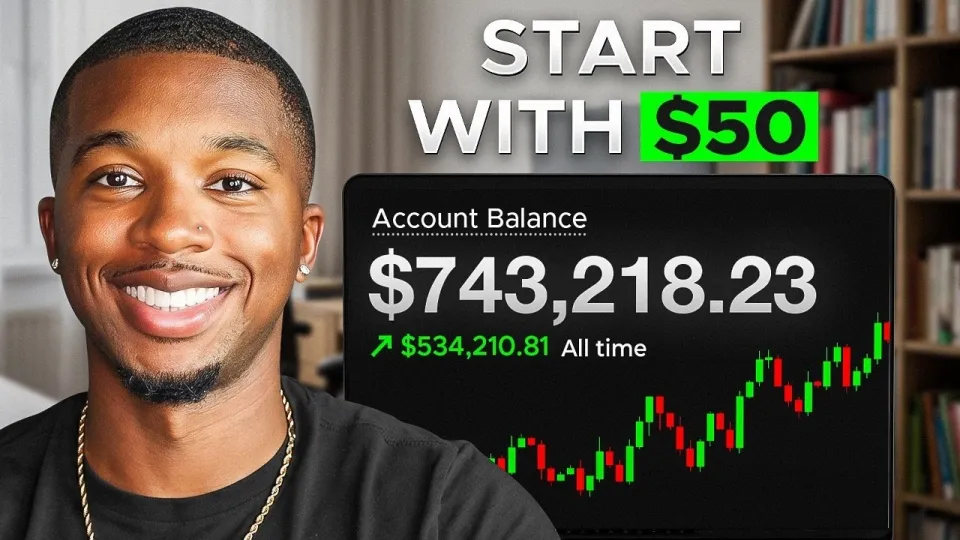
Video: Easiest Way To Start Day Trading From Scratch (Exactly What I Did)
You can order the same kind of articles for your own video to boost it on YouTube and Google. Just message the Telegram bot @sat_sit_bot. It writes articles around your video, embeds the video and publishes them on popular niche websites (no ads). Try it free: 50 articles on us.
Key takeaways
- Start on a demo account and backtest one setup for weeks before risking real money.
- Learn candlestick anatomy first: open, close, high, low, body and wick tell the story of a bar.
- Trade one instrument and one setup — a single repeatable pattern beats a dozen indicators.
- Cap risk at roughly 1% of account equity per trade so a losing streak cannot end your account.
- Prop firm evaluations let beginners trade firm capital instead of blowing a small personal account.
Day trading from scratch means learning one repeatable setup on a demo account, practising it until the results are consistent, then risking a small fixed percentage of capital per trade. You do not need a large account, expensive software or a wall of indicators to begin — you need a chart, a rule set and the patience to follow both. Jooviers Gems breaks this exact path down in the video "Easiest Way To Start Day Trading From Scratch (Exactly What I Did)", and viewers who want his live trades can join his Inner Circle through the Gemify membership page.
What Day Trading Actually Requires From A Beginner
Day trading is the practice of opening and closing positions inside the same session, so you never hold overnight gap risk. That single rule shapes everything else: your decisions happen in a short window, your losses are realised fast, and your edge has to show up repeatedly rather than once a quarter.
Before anything else, a beginner needs four things in place:
- A funded practice account — most brokers and prop firms offer a free demo with live charts.
- A written rule set — entry, stop, target and maximum trades per day, on paper.
- A journal — every trade logged with the reason you took it, not just the profit or loss.
- A schedule — two or three hours at the same time each day, ideally around a major session open.
What day trading does not require is a six-figure balance. Small accounts can work, but only when position size is scaled to the account rather than to your ambition.
Reading Candlesticks Before Anything Else
A candlestick is a compressed record of price action over a fixed period, and it is the smallest unit of information a day trader reads. Each bar shows four prices: the open, the close, the high and the low.
The body — the thick part — spans the distance between open and close. A green or white body means the close finished above the open; a red or black body means it finished below. The thin lines above and below, called wicks or shadows, mark the extreme prices reached during the bar.
Why this matters in practice:
- A long lower wick with a small body suggests buyers stepped in after sellers pushed price down.
- A long upper wick near a recent high suggests sellers are defending that level.
- A large body closing at its extreme shows conviction, not hesitation.
Most beginner confusion comes from skipping this step and jumping straight to indicators. Indicators are derived from price; candlesticks are price.
Choosing One Setup And One Market
A setup is a specific, describable condition that must be true before you click buy or sell — for example, price reclaiming a level it previously lost, or a strong candle closing beyond a short consolidation. The exact pattern matters far less than the consistency of applying it.
Practical constraints that keep beginners alive:
- Pick one instrument. Futures such as the micro S&P 500 or Nasdaq contracts, or a single major forex pair, behave differently from each other; switching constantly destroys pattern recognition.
- Pick one session. Trading the first hour of the US session produces a very different rhythm from the Asian session.
- Define the invalidation first. Decide where you are wrong before you decide where you are right.
- One setup, one hundred repetitions. Skill comes from repetition, not from collecting strategies.
Futures and forex are popular starting points because they offer tight spreads, deep liquidity and micro contract sizes that let a small account take a real position without excessive risk.
Risk Management That Keeps A Small Account Alive
Risk management is the difference between a learning curve and a blown account, and it is arithmetic rather than opinion. A common beginner guideline is to risk no more than about 1% of account equity on any single trade.
On a $1,000 practice account, 1% is $10 of risk. If your stop-loss sits 10 points away on an instrument worth $1 per point, your position is one unit. On a $10,000 account, the same stop allows ten units. Position size is therefore an output of your stop distance, not a guess.
Three rules that do most of the work:
- Set the stop before entry and never widen it while the trade is open.
- Cap daily losses — for example, stop for the day after two losing trades or a 3% drawdown.
- Track a reward-to-risk ratio; a setup risking $1 to make $2 only needs to win about a third of the time to break even before costs.
Losses are part of the sample size. A strategy that wins eight of ten trades still loses twice, and those two losses are not evidence that the method is broken.
Demo Trading, Backtesting And Getting Funded
Demo trading and backtesting are how you build evidence before you build income. Backtesting means scrolling back through historical charts and marking every occurrence of your setup, then recording what happened next — ideally across at least a few hundred examples.
A workable sequence:
- Backtest the setup on historical charts and log win rate, average win and average loss.
- Forward-test it on a demo account in real time for several weeks.
- Only then move to a small live account, keeping the same position sizing.
- Once the results are stable, consider a prop firm evaluation to trade firm capital.
Prop firm evaluations — sometimes called funded accounts or challenges — typically require you to hit a profit target without breaching a maximum daily loss or overall drawdown limit. They suit beginners with limited capital because the risk is the evaluation fee rather than a personal account balance, and they enforce the discipline that self-directed traders often skip. The trade-off is strict rules: a single oversized day can end an otherwise profitable evaluation.
Common Beginner Questions And Misconceptions
Beginners tend to ask the same handful of questions, and the honest answers are less exciting than the marketing. The most frequent doubts are about how much money is needed, how long it takes to become profitable, whether a course is necessary, and whether demo profits mean anything.
Key clarifications:
- Demo results are not proof of profitability. Execution psychology changes once real money is on the line, even a small amount.
- A paid course is not mandatory, but unstructured self-teaching is the most common reason people quit; a curriculum shortens the trial-and-error phase.
- Speed is not a strategy. Many beginners eventually find slower timeframes easier to read than one-minute charts.
- Comparing your first month to someone else's highlight reel is a reliable way to make bad decisions.
- Employment risk is real — losing a job is a common motivation for learning to trade, but trading income is variable and should not be treated as a replacement salary early on.
The realistic timeline for most people is months of practice before consistency, not days. Treating the first phase as education rather than income makes the learning cheaper.
Useful Links
- Inner Circle — all of Jooviers' trades: https://www.getgemify.com/innercircleo?el=youtube_organic
- The Edge Funder — instant funding to trade: https://www.theedgefunder.com/
- The Edge Funder Discord community: https://discord.gg/WpJXHKK7f2
- Instagram: https://www.instagram.com/joovier_
- Recommended forex broker: https://herofx.co/joovier/
A Realistic Starting Point
Starting day trading from scratch is a sequence, not a shortcut: learn how a candlestick is built, choose one setup and one market, define your risk per trade in advance, then prove the method on demo data before funding it with real money. The channel Jooviers Gems walks through this progression in "Easiest Way To Start Day Trading From Scratch (Exactly What I Did)", including the funding route many beginners use instead of a large personal balance. Progress comes from repetition and honest record-keeping, not from a perfect indicator. If you want to see the process applied trade by trade, the Inner Circle membership is where those trades are shared.
Questions & answers
How much money do I need to start day trading?
You can start learning with a free demo account and no capital at all. When you move to live trading, the practical minimum depends on the instrument: micro futures contracts and micro lots in forex let you take real positions with a few hundred dollars, provided you risk only about 1% per trade. Many beginners skip the large personal account entirely and use a prop firm evaluation instead.
How long does it take to become profitable?
Most beginners need months of backtesting and demo trading before results become consistent, and there is no fixed timeline. The useful benchmark is not calendar time but sample size: a few hundred logged setups with a stable win rate and reward-to-risk profile. Expecting income in the first weeks is the fastest route to frustration.
Do I need to pay for a trading course?
No course is strictly required, but unstructured self-teaching is one of the most common reasons people quit early. A structured curriculum shortens the trial-and-error phase by telling you what to practise and in what order. Free content, including full beginner walkthroughs, can cover the same ground if you follow it systematically.
Does making money on a demo account mean I am ready to trade live?
Not automatically. Demo trading proves you can execute a rule set, but it does not test how you handle real losses, which is where most discipline breaks down. The safer transition is to keep the same position sizing on a small live account and compare the results against your demo sample before scaling up.
Source: Easiest Way To Start Day Trading From Scratch (Exactly What I Did) · Markdown version